

25 feb 2026
Knowing how to store business documents securely is critical for small businesses, but it’s frequently overlooked. Without a clear system, files pile up, compliance risks increase, and sensitive information becomes vulnerable. At the same time, shredding documents too early can create legal trouble.
The key is managing the full lifecycle of your records: deciding what to keep, setting a retention policy, choosing the right storage method, and securely shredding what’s no longer needed. This guide walks you step by step through storing and securely destroying business documents with clarity and confidence.
Before you think about how to store business documents or arrange for secure document shredding, you need clarity on one thing: what should actually stay and for how long?
Many small businesses either keep everything “just in case” or dispose of documents too early. Both create risk. The solution is to first sort and categorize your records, then assign realistic retention timelines.
Begin by grouping your documents into broad categories. This makes business document management far more manageable and forms the foundation of a practical document retention policy.
Most small businesses can work with four main categories:
Sorting first prevents accidental destruction and helps you identify which records fall under specific IRS document retention requirements.
For example, a small business might structure its retention policy like this:
If your team doesn’t have a structured process yet, creating a standardized document management workflow ensures documents are consistently categorized, stored, and eventually archived or shredded.
Once your documents are categorized, the next step is turning that structure into a clear document retention policy.
A retention policy defines:
Businesses often fall into two risky patterns without this step: keeping everything forever or shredding too early. Both can create compliance issues, especially when dealing with IRS document retention requirements or industry-specific regulations.
Your policy doesn’t need to be complicated. For most small businesses, a simple internal guide works:
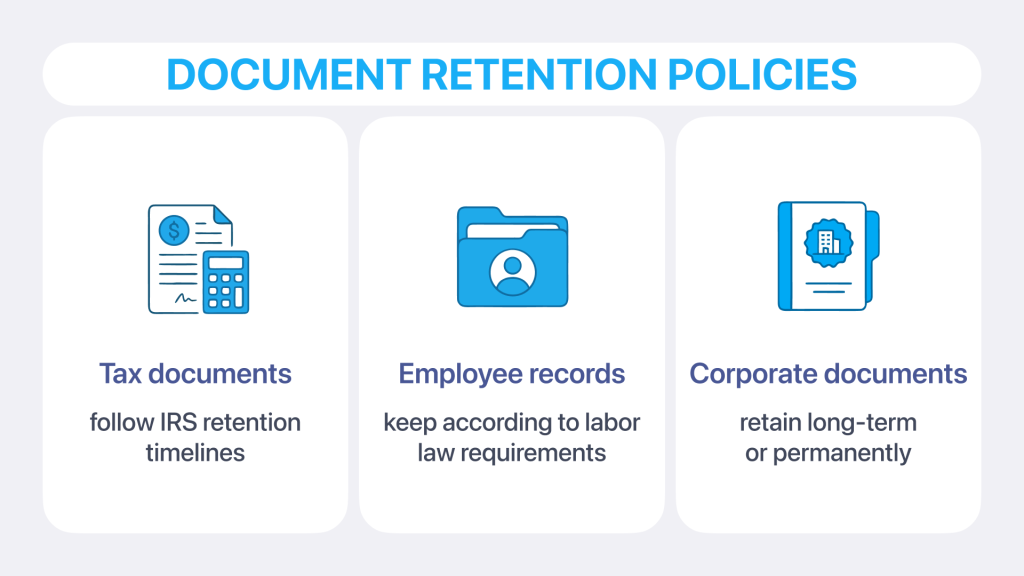
This structure effectively acts as a simplified document retention schedule template and supports strong business document retention practices.
Once you know what to keep and for how long, the next decision is where and how to store business documents. The right storage method depends on document sensitivity, legal requirements, and how often you need access.
Most small businesses use a combination of physical and digital document storage.
Physical document storage is still necessary for certain originals, such as signed contracts, corporate formation documents, or licenses that must be preserved in hard copy.
To keep paper records secure:
These paper document storage best practices help protect records from theft, fire, and environmental damage.
However, relying only on physical business paper storage increases clutter and makes retrieval slower, especially during audits or urgent requests.
Digital document storage allows you to reduce paper volume while improving access and security.
Instead of storing stacks of paper, businesses can scan to digital and maintain organized, searchable files in secure cloud storage. This supports better business document management and moves you closer to a paperless lifestyle.
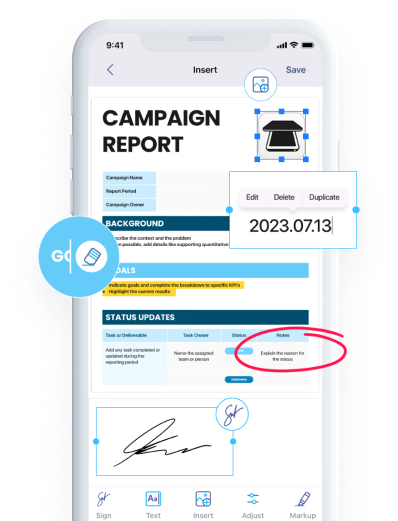
Using a business document scanner and storage solution like iScanner makes this process simple:
With cloud backup and offsite backup built into your workflow, digital document storage reduces the risk of loss while keeping files accessible anytime.
For businesses transitioning away from paper, improving your digital document filing system can significantly reduce long-term storage costs and improve efficiency:
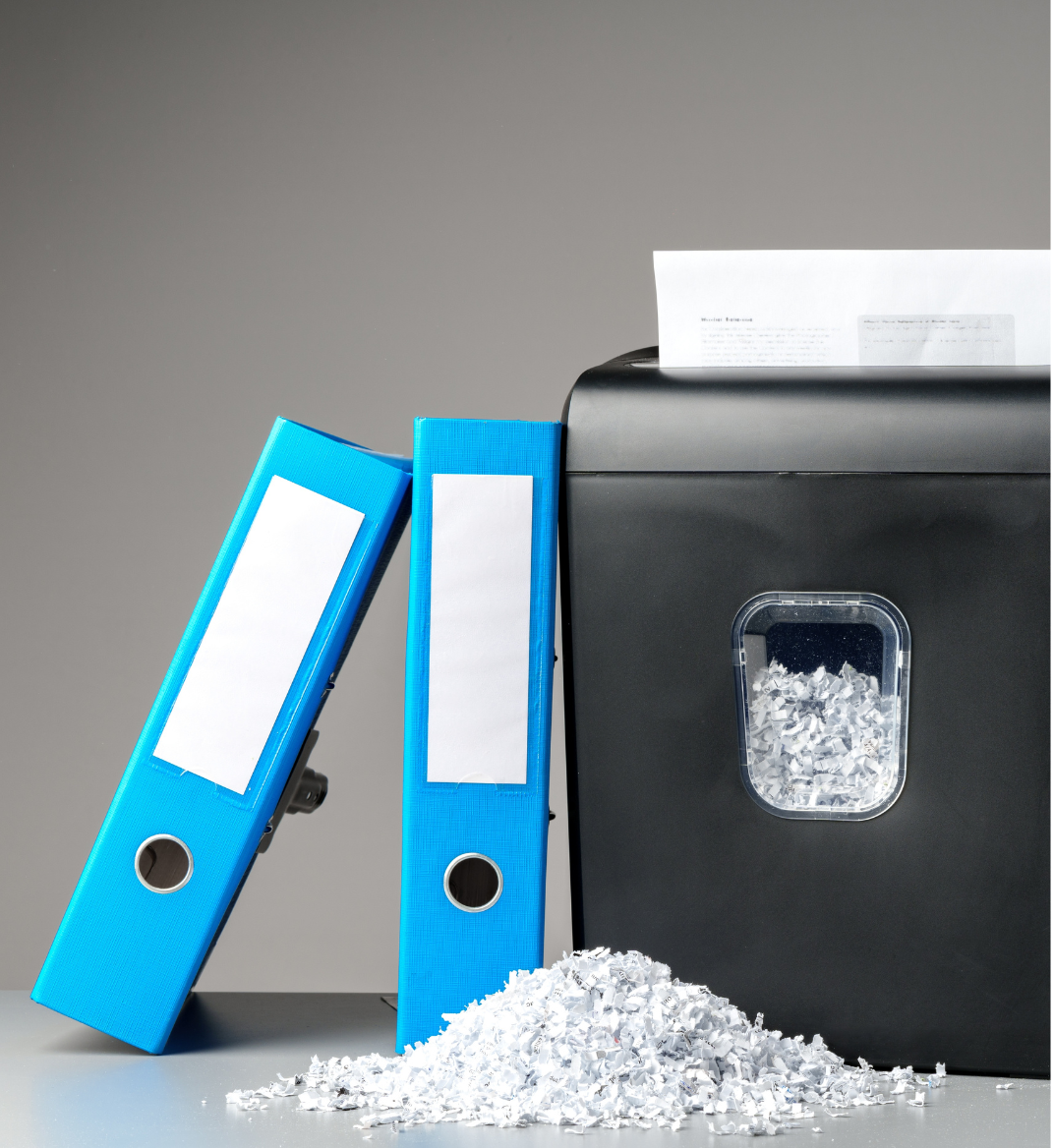
Once a document reaches the end of its retention period, it should move out of storage and into secure destruction. This step is just as important as storage, as improper disposal is one of the leading causes of data breaches and identity theft.
Before shredding, always confirm two things:
Destroying documents too early can violate IRS document retention requirements, while keeping outdated files too long increases legal and security risk.
For small amounts of paper, using a cross cut shredder for business is generally the minimum standard. Unlike a strip-cut shredder, cross-cut and micro-cut shredders make reconstruction significantly harder, supporting better data breach prevention.
For larger volumes or highly sensitive files, professional secure document shredding services are often the safer choice. A certified document destruction service ensures:
Many providers are NAID certified, which signals adherence to recognized document shredding compliance standards.
If you’re clearing out years of archived files, you may need bulk document shredding or purge shredding services. Businesses often search for “document shredding near me” to find local providers offering on-site document shredding or mobile shredding service options.
Before you shred business records, consider whether they should be digitized. Scanning important documents into secure document storage ensures you maintain access without keeping unnecessary paper.
By combining structured retention, secure storage, and compliant document shredding, you create a complete and secure business document lifecycle.