

26 mar 2026
There’s no surprise that paper has supported business operations for decades. Contracts, invoices, reports, and internal documents have traditionally been stored in filing cabinets and archives. For many organizations, this system remains familiar and reliable. However, paper-based workflows also create challenges. Documents can be misplaced, and information can be difficult to retrieve, while maintaining physical records requires both time and space. Fortunately, as companies modernize their operations, many are exploring digital alternatives. Understanding the benefits of going paperless helps businesses see how document digitization can simplify workflows and improve collaboration, creating a more flexible working environment. This article explains why more organizations are moving toward paperless operations, and which steps they’re taking to make the transition successfully.
A paperless approach doesn’t necessarily mean eliminating paper entirely overnight. Instead, it focuses on replacing manual, paper-heavy processes with digital workflows wherever possible.
This shift often begins with document digitization: scanning existing paperwork and storing it securely in digital systems. Once documents become digital, they can be organized, shared, and accessed much more efficiently.
Companies across industries—from finance and healthcare to education and small businesses—are adopting this model because it improves both operational efficiency and long-term document management.

When documents are stored digitally, employees no longer need to search through filing cabinets or archive boxes to find information. Instead, files can be retrieved instantly through search functions or organized folders. Digital workflows also reduce time spent on routine tasks such as printing, copying, and manual filing, allowing employees to avoid managing paperwork.
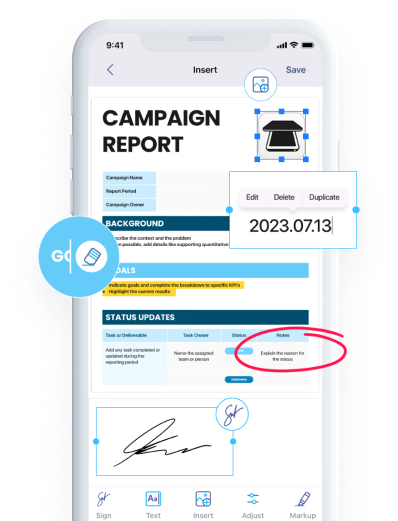
For example, instead of printing a contract, signing it, scanning it again, and sending it by email, teams can handle the entire process digitally, using an app like iScanner to solve each issue within one slick, efficient ecosystem. Over time, these small improvements create significant time savings across the organization.
Paper-based systems involve more expenses than many businesses realize. The cost of paper, ink, printers, storage cabinets, and document archiving can accumulate into frightening sums. Moving to digital workflows reduces many of these expenses while simplifying document storage.
Beyond direct costs, paper processes also create hidden expenses, such as manual document processing and shipping paperwork, among others. Ultimately, digital document management helps eliminate these inefficiencies.
Modern businesses rely heavily on collaboration. Teams often work across departments, locations, or even time zones. A paper-based workflow makes collaboration difficult because physical documents must be copied, mailed, or passed between employees.
Digital documents remove these barriers. Once files are stored digitally, they can be shared instantly with colleagues or clients, making collaboration faster and more efficient. This is especially important for allowing all employees, regardless of their physical location, to access the documents without attending their offices. As a result, decision-making becomes faster, and communication becomes clearer.
Security is another important reason businesses move toward digital document systems. Paper documents are easy to lose, damage, access without authorization, and compromise. Moreover, a printed contract left on a desk or misplaced in an office can expose sensitive information.
Digital document management systems provide stronger protection through features such as access permissions, encryption, activity logs, and regular secure backups. These controls make it easier to track every action with the document. They also help businesses maintain compliance with data regulations and internal policies. Additionally, in many industries, all these capabilities are necessary for meeting specific regulatory requirements.
As companies grow, the number of documents they manage increases rapidly. Without a structured system, important information can become difficult to locate. Paperless workflows improve organization by allowing documents to be categorized, stored, tagged, and indexed digitally. This makes it possible to locate files within seconds instead of searching through physical folders.
Digital archives also reduce the risk of lost documents. Files can be backed up automatically and stored securely across multiple locations on remote servers, ensuring that important information remains accessible. For businesses managing large volumes of paperwork, this level of organization significantly reduces stress and operational delays.
Environmental responsibility is another factor motivating businesses to reduce their reliance on paper. Paper production takes a toll on nature and natural resources. Reducing paper consumption helps lower waste and decrease the negative effect of businesses on the environment.
In addition, less paper usage means fewer discarded documents in landfills and reduced emissions associated with printing and transportation, as well as paper production. For organizations that prioritize sustainability, adopting digital workflows can be an important step toward achieving environmental goals and winning the hearts of concerned clients.
Understanding the benefits of going paperless is only the first step. The next challenge is implementing practical changes that make the transition manageable. Businesses can begin with a few simple strategies.
Start by scanning important paper documents and converting them into digital files. This creates a central archive that employees can access quickly. Mobile scanning solutions, such as iScanner, make it possible to digitize documents anywhere without relying on large office scanners.
After scanning documents, Optical Character Recognition (OCR) technology can convert printed text into searchable digital text. This allows employees to search documents by keyword and retrieve information quickly, improving efficiency across teams. For instance, iScanner’s in-house OCR solution works with two dozen languages, ensuring similar quality when processing printed documents and hand-written notes.
Creating consistent naming systems and folder structures helps maintain order as your digital archive grows. For example, documents can be categorized by department, project, client, or document type. Why is it so important? Clear organization ensures that information remains easy to find in the future, especially if the naming remains consistent across different departments. iScanner’s automatic file-naming feature is a worthy contender to solve this issue.
Encourage teams to review documents digitally instead of printing them whenever possible. Digital signatures, shared files, and collaborative editing tools can replace many traditional paper processes—and iScanner combines this functionality within a single app. Besides, the impact of such small workflow changes accumulates over time and gradually reduces dependence on physical documents.
Paper documents once played a central role in business operations. Today, digital workflows offer a more efficient and flexible alternative in every way imaginable, including convenience. On top of that, digital document systems support modern work environments where teams operate across locations and devices. By gradually digitizing documents and adopting structured document management practices, organizations can build workflows that are both efficient and adaptable. Moving toward a paperless business is both a technological upgrade and a step toward a more organized, resilient, and future-ready way of working. With iScanner by your side, this journey can be streamlined and supported with maximum efficiency.